July 2026 Newsletter: Your Super-Duper power of Exercise
My mission is to be the first woman in 4 generations to not develop Alzheimer’s Disease (AD). On my journey of discovering ways to mitigate my risk, I pass this information on to you in this Brain-Body-Health (BBH) Newsletter.
Hello, Brain Body Health Citizen Scientists
YOUR Super-Duper power of Exercise
“Motion is the new lotion”
-Mary Ann Landis
The best medicine for your brain is… EXERCISE!!! Exercise is truly your very own super-duper super power. Let's break down the WHY, WHAT KIND, WHEN, and HOW this incredible resource can make us happier and healthier. Get ready for the deep dive!
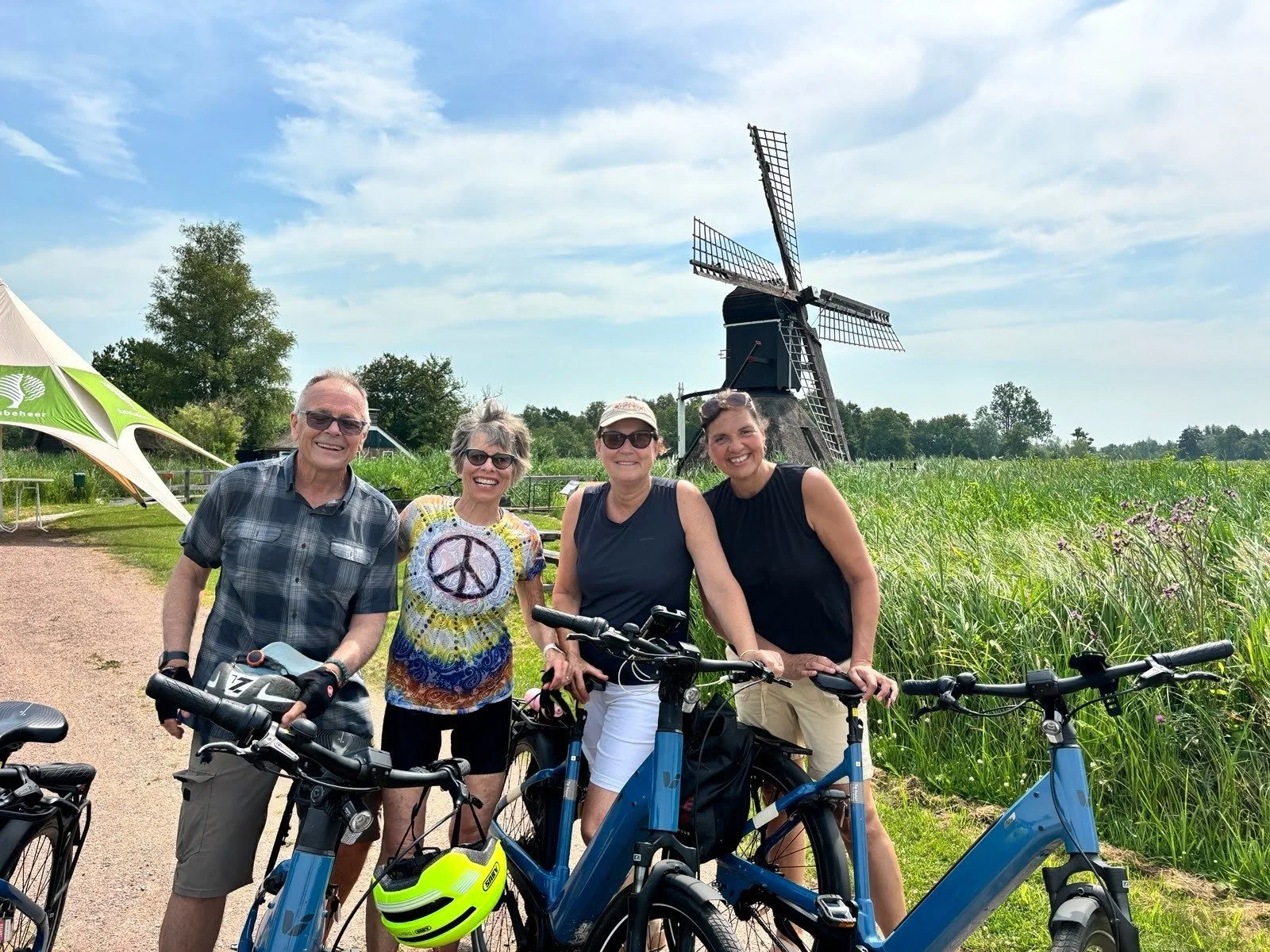
Cycling in Holland, Jim, me, Jannieke and Karin
In case you missed it:
we’ve been exploring our precious brain and real-life superpowers:
March:Superpower of Play
April: Superpower of the Vagus Nerve
May:What Will You Do With Your One Precious Brain?
June: The Superpower of Rest
Why Exercise Is Brain Medicine
When you move your body, your brain gets a chemical signal that nothing else — no pill, no supplement — quite replicates: a surge of Brain-Derived Neurotrophic Factor, or BDNF. Think of it as fertilizer for your brain, growing new neurons, strengthening connections between them, and protecting the ones you already have. Exercise, particularly moderate-to-high intensity aerobic activity, increases BDNF production in the hippocampus and prefrontal cortex — the regions most tied to memory and executive function. Muscle, bone, and even your liver release their own signals during exercise that reinforce this same effect — which is part of why movement benefits your brain like a full-body event, not just a workout for your legs.
The message is MOVE! Sitting is the new smoking and MOTION is the new lotion. Limit sitting to 20 minute sessions. Join the movement to MOVE and reap the brain body benefits.
Forget 10,000 steps — think 10 breathless minutes
Biomedical scientist Rhonda Patrick has challenged the popular 10,000-step target, noting it originated from a 1960s Japanese pedometer marketing campaign rather than science, and instead recommends 10 "breathless minutes" of vigorous activity daily, gauged by the talk test — if you can only manage a few words between breaths, you're in the right zone.
Why intensity matters, not just duration:
Lactate becomes brain fuel. That burning-lungs feeling during a hard effort comes from lactate building up in your muscles. It's not just a waste product — it crosses into the brain and is actually used there as fuel, on top of triggering more of the "fertilizer" effect described above.
A stronger heart and lungs may be the single best predictor of a long life. How efficiently your heart and lungs deliver oxygen to your body during hard effort — what's known as cardiorespiratory fitness — turns out to be one of the strongest predictors we have of how long you'll live. In long-term studies, the fittest people had roughly an 80% lower risk of dying over the study period than the least fit. And you don't need to become an athlete to benefit — even modest, incremental improvements in fitness were tied to meaningfully lower risk.
Research shows that one minute of vigorous exercise is worth dozens of minutes of light exercise.
Strength training: the other half of the equation
A recently reported 30-year study tracking tens of thousands of adults found that people doing roughly 90 to 120 minutes of strength training per week had about a 13% lower risk of dying from any cause than those who did none — including a 19% lower cardiovascular death risk and a 27% lower risk of death from neurological disease, primarily dementia. Notably, benefits plateaued beyond about two hours per week, and the lowest risk overall was seen in people who combined strength training with aerobic exercise.
This mechanism looks distinct from aerobic exercise: resistance training appears to improve blood sugar regulation and vascular health, the same pathways implicated in dementia risk. Separately, a long-term randomized study found that strength training produced measurable benefits in the hippocampus. A study of older adults with mild cognitive impairment found six months of strength training improved memory and protected against Alzheimer's disease. During the same period, the non-exercising control group's brain markers did not improve.
Which activities work — and where they fit in the zones
Heart rate zones describe effort relative to your maximum heart rate, from Zone 1 (easy, conversational) to Zone 5 (all-out). Zone 1 sits around 50–60% of max heart rate, with each zone increasing in roughly 10% increments up to Zone 5 at 90–100%. They matter because different zones stimulate different physiology:
Zone 1–2 (comfortable to moderately breathless): Swimming laps, steady cycling, brisk walking. This moderate-intensity "aerobic base" training supports focus, memory, and decision-making, and helps regulate the stress response. A 2018 study of over 1,200 older adults linked this zone specifically to significantly reduced dementia risk.
Zone 3–4 (breathing hard, only a few words at a time): Pickleball, line dancing, doubles tennis — enough cardiovascular challenge plus the cognitive bonus of quick reaction and coordination demands.
Zone 5 (breathless, the "10 breathless minutes" territory): Interval cycling, swim sprints, hill repeats — and for the not faint of heart there is Norwegian 4x4 (4 minutes hard, 3–4 minutes rest, repeated 4 times).
Are zones really important? The concept matters more than precision — you don't need to hit an exact number. What the evidence supports is variety. Research on trained athletes generally supports a polarized approach — roughly 80% of training time at easy effort and 20% at hard effort. Pickleball and dancing have a built-in advantage here — naturally swinging between hard bursts and recovery, matching this pattern perfectly.
Heart rate monitor — worth it? Briefly:
Pro: removes guesswork — most people believe they're working harder than they actually are.
Pro: resting heart rate trending down over time is a real signal of improving fitness.
Pro: can be a motivator and fun to see especially with long or high-intensity workouts.
Con: can tip into anxiety or over-optimization, chasing a number instead of listening to your body.
Con: wrist-based monitors are sometimes inaccurate during high-intensity or racket-sport movement.
For most people, the talk test is genuinely sufficient.
How much do you actually need?
The well-supported target: 150–300 minutes of moderate activity per week (or 75–150 minutes vigorous), plus resistance training, following standard exercise guidelines. That's roughly 30–60 minutes most days.
The benefit isn't just cumulative — it's daily. Adults in their 50s to 80s who exercised at this level scored better on memory tests the next day, and this held true even after accounting for their overall activity habits. This means that day-to-day changes in movement produce measurable, next-day cognitive benefits. Conversely, more sedentary-than-usual days were linked to worse next-day working memory. Today's walk isn't just for today.
Does timing matter?
Somewhat, though less than people assume:
One large study found people who exercised between 7 and 8 a.m. had the lowest risk of coronary artery disease compared to those exercising later in the day, even at matched activity levels.
A separate large UK study of over 92,000 people found that activity between 11 a.m. and 5 p.m. was linked to the lowest all-cause mortality risk, more so than morning or evening exercise.
The truth underneath both: any time beats no time, and consistency is what's really important.
BONUS: Exercise has a powerful effect on mood
Even a single session of physical activity can help many people feel calmer, happier, and more energized.
Here are some of the main ways exercise affects mood:
Boosts "feel-good" chemicals: Exercise increases the release of endorphins, dopamine, serotonin, and norepinephrine. These chemicals are involved in feelings of pleasure, motivation, and emotional well-being.
Reduces stress: Physical activity lowers levels of stress hormones like cortisol and helps your body recover more quickly from stressful situations.
Improves sleep: Regular exercise often leads to better sleep quality, and good sleep is closely linked to better mood.
Increases self-confidence: Reaching fitness goals, even small ones, can improve self-esteem and confidence.
Reduces anxiety and depression: Research shows that regular exercise can reduce symptoms of mild to moderate depression and anxiety. For some people, it can be nearly as effective as medication or therapy when combined with professional care.
Enhances brain function: Exercise increases blood flow to the brain and supports the growth of new brain cells, which can improve memory, concentration, and emotional resilience.
How to actually get yourself to do it
Prepare. Lay out clothes the night before, keep a jump rope, weights, or TRX bands close — the fewer decisions between you and starting, the more likely you follow through.
Schedule it. Put it in your daily schedule and/or widget it on your iPhone.
Set intention. "After I pour my morning coffee, I do 10 minutes" works better than a vague plan to "exercise more."
Pick something social. Pickleball, line dancing, or a walking group build in accountability — you're far less likely to skip when someone's expecting you.
Make it FUN. People stick with activities they genuinely like over ones they feel obligated to do.
Use "exercise snacks" on hard days. A 10-minute burst still counts — perfectionism is one of the biggest silent killers of consistency.
Keep strength training within arm's reach. A TRX band is a low-friction way to do this — hang one in a bedroom, or outside on a deck in summer. Online classes and in-gym sessions are good options too if structure and instruction help you stay consistent.
Move within an hour of eating. A short walk or light activity within about 60 minutes of a meal helps blunt the post-meal blood sugar spike, since muscle contraction pulls glucose out of the bloodstream independent of insulin. Do this consistently and you reduce the glycemic swings that, over years, contribute to insulin resistance, vascular damage, and dementia.
Grandpa's after-dinner recliner-and-TV routine is exactly the wrong move — it's the one moment in the day when sitting still does the most metabolic damage. A slow lap around the block after dinner does more good in that same 15 minutes than almost anything else.
Your Brain-Body-Exercise Checklist
Keep this somewhere visible — a phone widget, a sticky note on the fridge, a recurring phone reminder.
☐ Move for 20–40 minutes today.
150–300 min/week moderate, or 75–150 min vigorous☐ Get 10 breathless minutes at least a few times this week.
Talk test: only a few words at a time☐ Two strength-training sessions this week.
TRX, weights, or a class☐ Walk or move within an hour of eating.
Especially the largest meal of the day☐ Pick a time of day you'll actually stick with.
Morning for metabolic benefits, midday/afternoon if that's realistic for you☐ Choose one activity that's genuinely fun, not a “have to”.
Pickleball, dancing, swimming, cycling☐ On a low-energy day, do the 10-minute version.
Don't skip entirely☐ No post-meal recliner-and-TV.
Take a short walk instead☐ Limit sitting or reclining to 20 min.
Set a timer
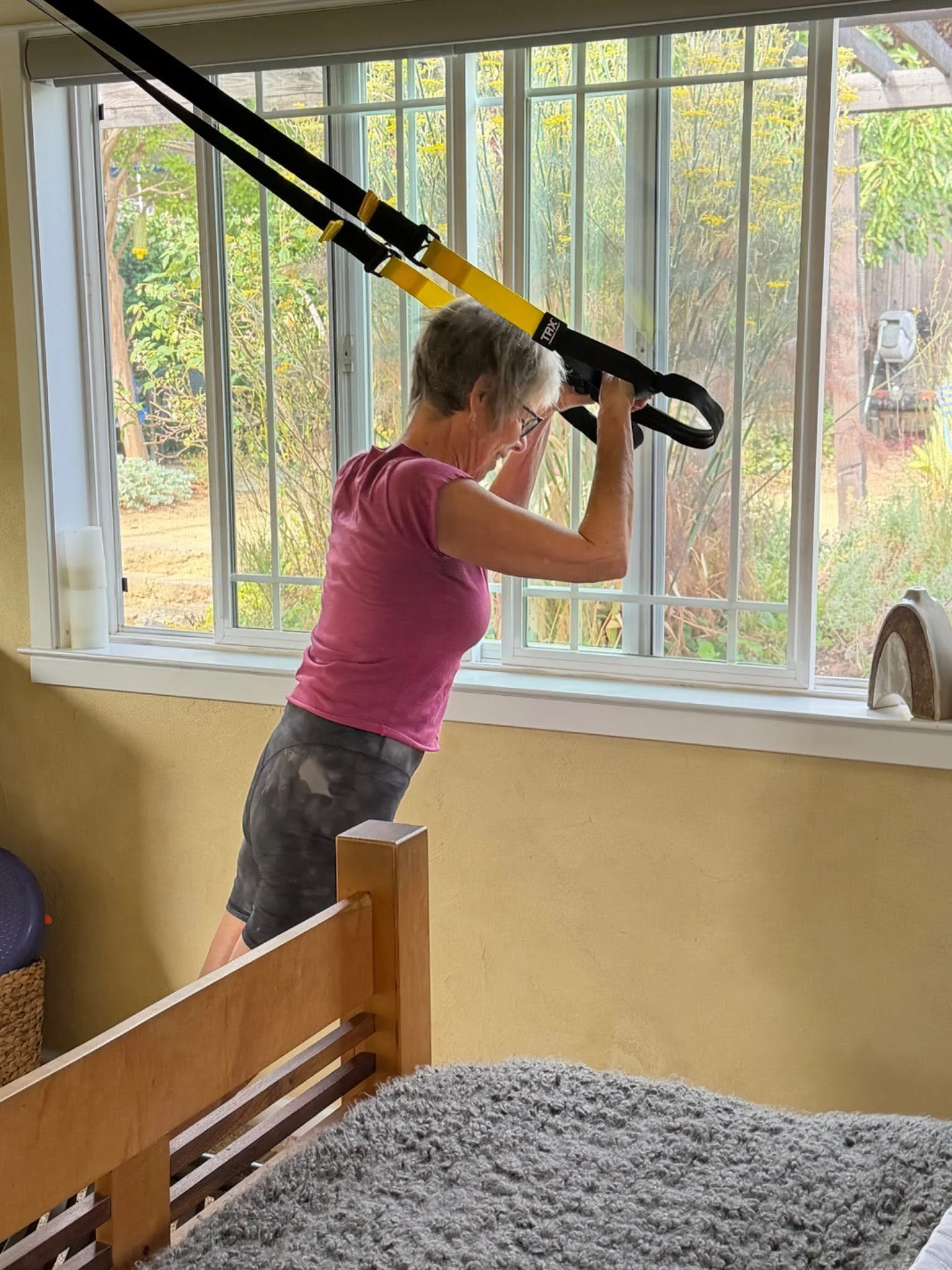
Easy access TRX bands in my bedroom
Resources
Jaberi S, Fahnestock M. "Mechanisms of the Beneficial Effects of Exercise on Brain-Derived Neurotrophic Factor Expression in Alzheimer's Disease."
Biomolecules, 2023. Brain Sciences, 2024. Kaagman DGM, et al. "Effects and Mechanisms of Exercise on BDNF Levels and Clinical Outcomes in People with Parkinson's Disease: A Systematic Review and Meta-Analysis."
Rhonda Patrick, "The Longevity & Brain Benefits of Vigorous Exercise." FoundMyFitness.
"Strength Training Is Linked to Longevity, 30-Year Study Finds." ScienceAlert, 2026.
Attention: Brain Body Health is now on Substack. You can download it on your mobile device or computer.
Creating each newsletter takes dedication and passion. Supporting this work ensures it can continue to inspire and educate.
Venmo: @bettyglacy
PayPal: @BettyLacy932
To optimal health and peace for all!

Subscribe to the email list for news and updates on Body-Brain Health
bettylacymd@gmail.com
Brainbodyhealth.org
For more information on Coaching sessions: Contact Dr. Betty @ bettylacymd@gmail.com for an appointment.
Brain & Body Health Newsletter | All content is for educational purposes. Please consult your physician for personal medical advice.
“If you want to go FAST, go alone. If you want to go FAR, go together."
- African proverb
To our optimized health!