December 2025 Newsletter: Our Brain Growth 2025: A Review
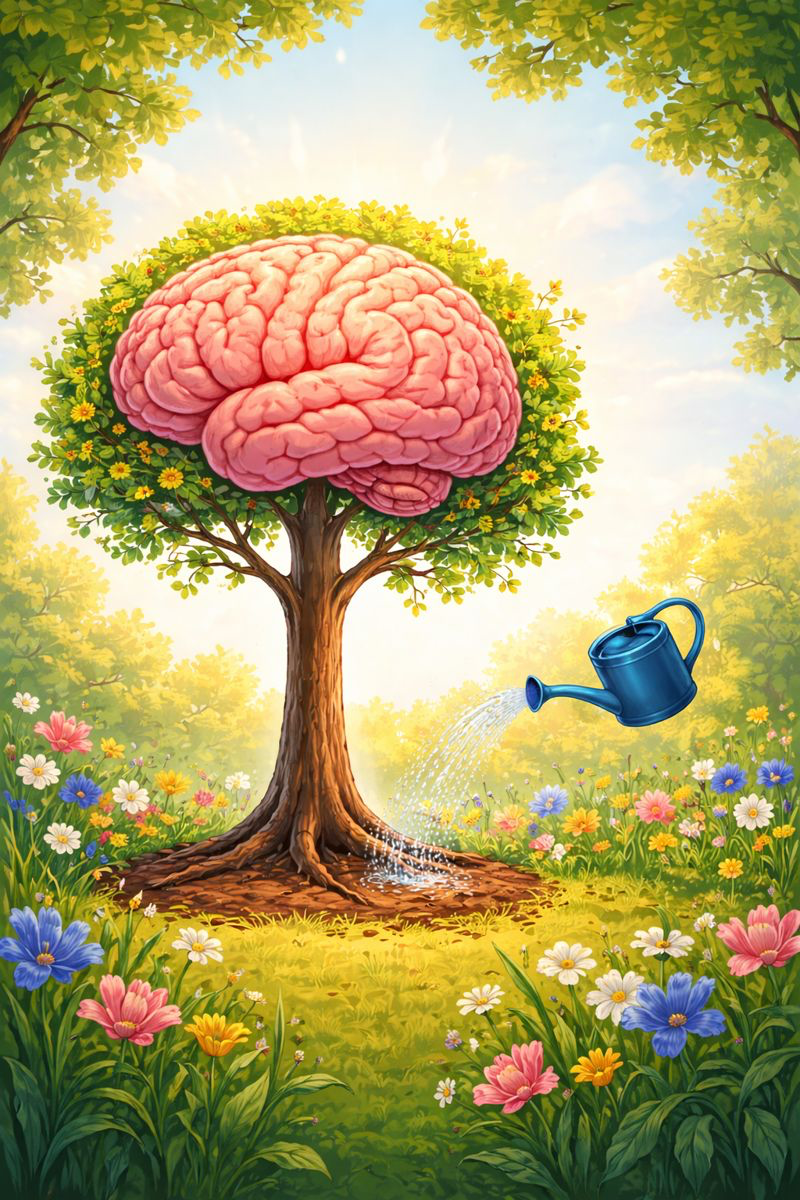
Remember when we used to think our brains stopped growing after age 16? Thankfully, science has shown that our brains keep changing and growing throughout our whole lives! But true brain growth isn’t just about collecting new facts: it’s about focusing on…

November 2025 Newsletter: Sleep & Dementia Prevention
As we transition into autumn and winter, shorter daylight hours trigger real biological changes that influence mood, energy, and sleep. This edition focuses on how to support your brain through seasonal shifts — and includes updated Brain-Healthy Thanksgiving strategies to help you…

October 2025 Newsletter | Planning for Dementia and End of Life
Last month we explored “Your Seasonal Brain.” This October, as autumn colors signal nature’s final transition, we turn to our own final season — the end of life. How do we prepare for this transition with clarity, dignity, and compassion — especially if…

September 2025 Newsletter | Seasons Change Our Brains
In Northern California, we are already feeling changes in the air, temperatures cooling, shadows lengthening, fall is on the horizon. This month, we are going to discuss how seasons affect your brain health. We all know to keep seasons in mind for our food choices, but did you know…

August 2025 Newsletter | Better Brains
What if I were to tell you there is an online program that assesses your brain health risks, provides a personalized plan to keep your brain optimized, and coaching to get you there? Count me in. Today I’m going to talk about achieving better brain health through this unique online platform called…

July 2025 Newsletter | Test, Test, TEST!
Testing is an important part of the process to help us untangle the dementia dilemma.
When my brother, sister, and I started to see brain changes in our parents, it took a number or years before they’re condition would be formally tested and diagnosed with dementia. Of course, we knew much earlier that something was wrong but couldn’t make sense of the problems we were seeing and we were unable to…

June 2025 Newsletter | From Awareness to Action
Dementia is tricky for our bodies and our brains. Like a curve ball, we can’t see it coming. It’s insidious and sneaky. It hides by attacking our brains at a snails pace. It doesn’t go for the jugular. It starts cutting like an evil editor on things you won’t notice. By the time you wonder if something is wrong with your brain, the damage is taking it’s toll. It’s a conundrum because memory impairment robs us of what just happened—our immediate—short-term memory. This is how it tricked scientists for decades leading to the…

May 2025 Newsletter | 🧠 Political Avoidance and the Brain
Like many, our family has faced the challenge of navigating differences. When our parents developed dementia, it threw us unprepared siblings into a line of fire. We had been avoiding conversations about our dyed-in-the-wool identities for years. Suddenly, it was no longer optional to avoid one another. It has been a steep and windy journey learning how to compromise, communicate, and find our way through the minefields of…

April 2025 Newsletter | 🧠 The Brain Science of Attention
We, humans, evolved in environments where constant scanning for threats and opportunities was essential for survival, wiring us for short bursts of attention. Our brains are especially drawn to novelty since anything new could be a potential danger or reward. At the same time, our working memory is limited — we can only hold a few pieces of information at once, making it hard to…

March 2025 Newsletter | Statins and Brain Health
We used to think that most dementias belonged to a single cause. However, scientists have figured out that dementias have multiple causes. For instance, Alzheimer’s Disease (AD) is the most common form of dementia and vascular dementia is a close second. These two forms of dementia are not mutually exclusive. Indeed, they often present together. Which comes first is based on clinical presentation, signs and…

February 2025 Newsletter | HEART HEALTH - the physical and emotional parts
In Chinese Medicine, ‘the heart’ refers to the emotional link between mind and body. It is the sovereign organ that allows harmony. Our world seems far from harmonious, but that doesn’t mean you can’t develop practices to focus and shift yourself into a good emotional state. We call this a RESET. That’s what we need when we are deregulated, stressed, overexcited, agitated, restless, or flat and depressed.

January 2025 Newsletter | Alcohol and the Brain
Most people know about liver disease risk but not about the increased risk of cancer with alcohol consumption. For certain cancers, like breast, mouth, and throat cancers, evidence shows that the risk of developing cancer may start to increase around one or fewer drinks per day. For breast cancer specifically, 16.4% of total breast cancer cases are attributable to alcohol consumption.