January 2026 Newsletter: Superpowered by Awareness
My mission is to be the first woman in 4 generations to not develop Alzheimer’s Disease (AD). On my journey of discovering ways to mitigate my risk, I pass this information on to you in this Brain-Body-Health (BBH) Newsletter.
Happy New Year, Brain Body Health Citizen Scientists
This month we’re talking about something your brain is already wired for: spirituality, awareness, and an awakened state of consciousness—and why these are essential for brain health.
Yes, spirituality.
And no, you don’t need a robe, incense, or a mountain retreat.
“Wait… That’s Not Me in the Mirror”
Do you ever look in the mirror and think, “Who is that person?” More grey hair. Less hair. New lines in places that didn’t used to fold. Or you walk into a room and ask: "Why did I come in here again? Where did I put the… thing?"
Forget IMHO. The new acronym is WDIP—Where Did I Put…
It’s an easy slide from everyday forgetfulness into the number one fear of older adults: “Do I have Alzheimer’s disease?”
Welcome to your Brain on Fear—a biochemical cocktail of cortisol, dopamine, and adrenaline. When balanced, they’re your friends. When not, you quickly turn into the Incredible Hulk.
Your Amygdala: The Brain’s Overly Dramatic Bodyguard
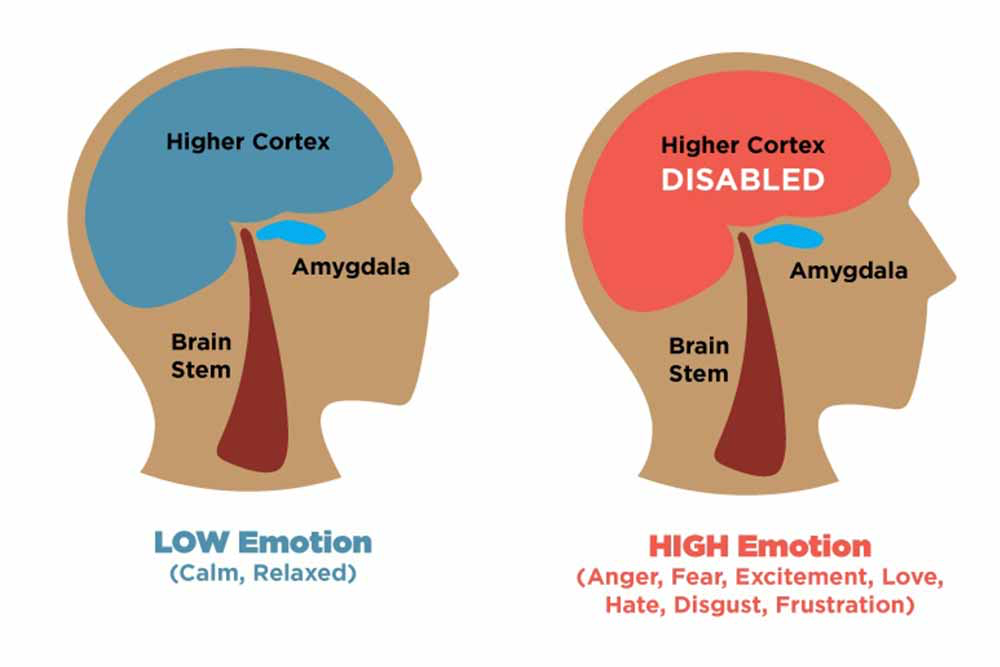
When fear kicks in, your amygdala—the emotional brain—takes over. Its job is simple and ancient:
“Danger! Something bad is happening! Do something—anything—right now!”
Even a slightly off-kilter comment can set it off. A storm of hormones and memories follows, creating immediate reactions and long-term brain wiring. Fight, flight, freeze, or fawn become the default survival strategies. These reactions become ingrained as habits of mind: polarization, hyper-vigilance, suspicion, and comparison. Practice them enough, and they become grooves in your neural pathways, reinforced by hormones and neurotransmitters. This system worked beautifully when we lived in caves and faced predators. Today, the stress response itself can become a threat to brain health. Add poor sleep, limited movement, metabolic issues, loneliness, lack of meaning—your SLEDSSSS factors—and off we go down the rabbit hole.
F.E.A.R. — False Evidence Appearing Real
Fear sits at ground zero of the stress pyramid. Fear of illness, aging, politics, addiction, death—things we cannot fully control—leaves us feeling helpless and powerless. When we’re in fear, we’re in the lower brain—the limbic system. That’s survival mode. Great for escaping lions. Terrible for solving modern life.
Your prefrontal cortex is the part that weighs problems, plans, empathizes, and creates solutions. It’s your inner Mahatma Gandhi.
Your Brain Is Wired for Spirituality
Lisa Miller, author of The Awakened Brain, suggests our brains are wired for an inner search for meaning, connection, and transcendence. This is a personal journey that you embark on through methods like meditation, reflection, religious readings, or prayer. Research increasingly shows that spirituality can improve emotional regulation, resilience, and mental health.
A Pickleball Epiphany
Recently, some teenagers blasted loud music and taunted us on the pickle-ball court. We felt frustrated, angry, and helpless. They wanted attention. We didn’t want to give it to them. Most of us were triggered by adolescent memories, being one, or being a teacher or parent of one.
My teenage experiences were shadowed by childhood trauma. I could have been one of those taunters. It wasn’t till later I learned, that a trusted connection with a small circle of girlfriends who were “a little bad”, helped regulate my nervous system. But there was a glitch. I learned to regulate myself through others, which led to over-connecting and codependency. I didn’t realize the most important relationship I needed was still longing for something inside. When I saw those teenagers acting out, all I could think about was how I would be doing the same thing. I felt an opening in my heart for those girls. I felt an opening for my teenage self.
As Gabor Maté says, trauma can be a treasure. Yoga, Aikido, meditation, tai chi, therapy, 12-step work—these practices called me inward and to attend to mind, body, and spirit medicine. Later on the journey, I stopped blaming parents, partners, trauma, and thinly disguised misogyny. I began taking responsibility for my emotional life.
That was the beginning of my waking up.
Awareness: Your Brain’s Superpower
Awareness is stepping back and becoming the observer rather than the reactor. It’s noticing: “Oh, I’m triggered”. When triggered, blood flow shifts away from your brain toward your muscles. You rely on old survival networks and thought distortions that magnify the negative. Evolution wired this in. But evolution also gave you: awareness—the upgrade.
Top-down (talking, thinking) and bottom-up (body-based) approaches both matter. Your brain, body, and environment are one integrated system—trigger and treasure included.
The Science Behind the Awakened Brain
Spirituality and awareness are not just poetic ideas—they are measurable brain states studied in laboratories.
One of the pioneers in this field is Dr. Richard Davidson at the University of Wisconsin–Madison, founder of the Center for Healthy Minds. Davidson and his team studied Tibetan Buddhist monks—people with tens of thousands of hours of meditation practice—and found remarkable brain differences.
Key findings from Davidson’s research:
Long-term meditators show increased activity in the prefrontal cortex, the brain area responsible for emotional regulation, compassion, and executive function.
They demonstrate reduced amygdala reactivity, meaning they recover more quickly from stress.
Their brains show greater gamma wave activity, associated with learning, memory, and integrative consciousness.
Meditation can physically change brain structure and connectivity—a phenomenon known as neuroplasticity.
In other words, monks aren’t just calm because they live on mountains and don’t check email. Their brains are literally wired differently.
And here’s the good news: you don’t need a monastery, shaved head, or robes. A few minutes of daily awareness practice can begin reshaping your brain.
Awareness Is Brain Training
Awareness practices strengthen your prefrontal cortex, quiet your amygdala, and improve communication between brain regions. This means better mood, better focus, better relationships—and fewer moments of standing in the kitchen wondering why you’re holding the TV remote.
Finding the Pause Button
The awakened state is the pause between stimulus and response—the space where wisdom sneaks in before your amygdala posts on social media.
You might notice you’re triggered when:
Your heart beats faster (your body thinks your inbox is a saber-tooth tiger)
Your breath becomes rapid or shallow
Your jaw clenches, shoulders rise, or stomach tightens
Your voice gets louder or more “passionate” (read: reactive)
You feel restless, edgy, or ready to write a strongly worded email
These are not character flaws. They are autonomic nervous system alerts saying: “Pause. Your wise brain is temporarily offline.”
That pause is where your prefrontal cortex logs back in and your inner monk (or nun) returns from coffee break.
Why the Pause Matters
When you pause briefly after an inhale, you activate one of the most powerful brain–body communication systems: the vagus nerve and the parasympathetic nervous system (your “rest-and-digest” mode).
What the pause does:
Increases vagal tone – Higher vagal tone is linked to better emotional regulation, resilience, and longevity.
Improves Heart Rate Variability (HRV) – A key marker of brain–heart health and stress resilience.
Signals safety to the brain – The brain interprets slow breathing with a pause as “All is well,” reducing amygdala reactivity.
Enhances prefrontal cortex function – Better thinking, empathy, and impulse control.
Synchronizes brain and body rhythms – Sometimes called “heart–brain coherence.”
Translation:
A 2-beat pause tells your nervous system:
“You’re not being chased by a tiger. You can think like a human.”
Developing Awareness: Everyday Spiritual Brain Workouts
Awareness is not mystical—it is trainable neurobiological action.
Notice the Impulse—Then Pause: Feel the urge to act on a habit. Instead of speaking, use your listening ears. Instead of reacting, observe.
Walk in Nature: Nature exposure lowers cortisol, improves mood, and increases attention. Your brain evolved in forests, not Costco.
Hang Out with Children (Including Your Inner One): Playfulness increases dopamine and creativity. Let your inner child out—just keep them away from your credit card.
Sing or Hum: Singing and humming stimulates the vagus nerve, increasing parasympathetic (calm) tone. You don’t need talent. Your nervous system is tone-deaf.
Conscious Breathing: Slow breathing increases heart rate variability (HRV), a marker of resilience and longevity. Longer exhales tell your brain: “We’re safe. You can stop planning your escape.”
Look at the Horizon or the Moon: Gazing outward expands perspective and reduces rumination. Imagine the moon looking back at you. Cosmic awareness—no Wi-Fi required.
Get Quiet: Silence reduces sensory overload and default mode network rumination. Also, it’s the only known antidote for doomscrolling.
Core Brain Health Strategies (SLEDSSSS)
When I founded Brain–Body–Health, I included all the pillars of brain health, and the one that is often missing–spirituality/purpose.
Sleep – Memory consolidation, brain detox, emotional regulation.
Learning – Builds cognitive reserve and neuroplasticity.
Exercise – Increases BDNF, blood flow, and mood.
Diet – Fuels neurons, mitochondria, and microbiome.
Socialization – Connection is neuroprotective.
Stress Reduction – Lowers cortisol and inflammation.
Sensory Health – Vision, hearing, and sexual balance keep the brain engaged.
Spirituality and Purpose – Meaning, connection, consciousness, and resilience.
That last category is why spirituality was part of BBH from the beginning. Meaning and purpose are essential to brain health.
Key Takeaways
Your brain is wired for spirituality, awareness, and meaning.
Fear hijacks the limbic system; awareness reactivates the whole brain.
Spirituality and purpose are core brain-health strategies—not optional extras.
Practices like breathing, nature, singing, silence, and play physically change the brain.
Research by Richard Davidson and others shows meditation strengthens the prefrontal cortex and calms the amygdala.
Core brain health pillars include sleep, learning, exercise, diet, socialization, stress reduction, sensory health, and spirituality/purpose.
Conscious choices build resilience, compassion, and cognitive longevity.
You may forget your keys, but your awakened brain can remember who you are.
Resources
Neuroscience & Consciousness:
Global Workspace Theory: Dehaene, S., & Changeux, J. P. (2011). "Experimental and theoretical approaches to conscious processing." Neuron, 70(2), 200-227. Suggests consciousness results from widespread information sharing across brain networks (particularly prefrontal, parietal, and cingulate cortices).
Integrated Information Theory (IIT): Tononi, G. (2008). "Consciousness as integrated information: a provisional manifesto." Biological Bulletin, 215(3), 216-242. States consciousness depends on the brain’s ability to integrate information (high in the posterior cortex).
Default Mode Network & Self-Reflection: Andrews-Hanna, J. R., et al. (2014). "The default network and self-generated thought: component processes, dynamic control, and clinical relevance." Annals of the New York Academy of Sciences, 1316(1), 29-52.
Spiritual & Philosophical Views:
William James (1902). "The Varieties of Religious Experience." Argues that altered conscious states can reveal fundamental truths, not reducible to brain activity alone.
Tibetan Buddhist texts (e.g., Dalai Lama, "The Universe in a Single Atom," 2005) and Upanishads: Describe consciousness as a universal, all-pervading principle—sometimes viewed as foundational to reality, not just emergent from biology.
Davidson, R. J., & Goleman, R. (2017). "Altered Traits: Science Reveals How Meditation Changes Your Mind, Brain, and Body." Summarizes decades of research, showing that expert meditators develop altered patterns in brain networks related to attention, awareness, and positive emotion.
Lutz, A., Dunne, J. D., & Davidson, R. J. (2007). "Meditation and the Neuroscience of Consciousness: An Introduction." In The Cambridge Handbook of Consciousness (pp. 499-551). Reviews how meditation cultivates meta-awareness (the ability to observe one’s own mental states), is linked to changes in the anterior cingulate cortex, insula, and other regions.
Brefczynski-Lewis, J. A., Lutz, A., Schaefer, H. S., Levinson, D. B., & Davidson, R. J. (2007). "Neural correlates of attentional expertise in long-term meditation practitioners." PNAS, 104(27), 11483-11488.Shows long-term meditation is associated with increased activation in attention and awareness networks.
Contemplative Neuroscience & Richard Davidson:
Davidson, R. J., & Goleman, R. (2017). "Altered Traits: Science Reveals How Meditation Changes Your Mind, Brain, and Body." Summarizes decades of research, showing that expert meditators develop altered patterns in brain networks related to attention, awareness, and positive emotion.
Lutz, A., Dunne, J. D., & Davidson, R. J. (2007). "Meditation and the Neuroscience of Consciousness: An Introduction." In The Cambridge Handbook of Consciousness (pp. 499-551). Reviews how meditation cultivates meta-awareness (the ability to observe one’s own mental states), is linked to changes in the anterior cingulate cortex, insula, and other regions.
Brefczynski-Lewis, J. A., Lutz, A., Schaefer, H. S., Levinson, D. B., & Davidson, R. J. (2007). "Neural correlates of attentional expertise in long-term meditation practitioners." PNAS, 104(27), 11483-11488.Shows long-term meditation is associated with increased activation in attention and awareness networks.
Spiritual & Philosophical Views:
William James (1902). "The Varieties of Religious Experience." Argues that altered conscious states can reveal fundamental truths, not reducible to brain activity alone.
Tibetan Buddhist texts (e.g., Dalai Lama, "The Universe in a Single Atom," 2005) and Upanishads: Describe consciousness as a universal, all-pervading principle—sometimes viewed as foundational to reality, not just emergent from biology.
Books:
The Awakened Brain: Lisa Miller
The Brain that Changes Itself: Norman Doidge
Buddha’s Brain: Rick Hanson
Unshakeable: Joann Rosen
Whole Brain Living: Jill Bolte Taylor
My Stoke of Insight: Jill Bolte Taylor
Attention: Brain Body Health is now on Substack. You can download it on your mobile device or computer.
Creating each newsletter takes dedication and passion. Supporting this work ensures it can continue to inspire and educate.
Venmo: @bettyglacy
PayPal: @BettyLacy932
To optimal health and peace for all!

Subscribe to the email list for news and updates on Body-Brain Health
“If you want to go FAST, go alone. If you want to go FAR, go together."
- African proverb
To our optimized health!