September 2026 Newsletter: When the Brain Gets Hurt: Trauma, Genes, and the Superpower to Rewire
My mission is to be the first woman in 4 generations to not develop Alzheimer’s Disease (AD). On my journey of discovering ways to mitigate my risk, I pass this information on to you in this Brain-Body-Health (BBH) Newsletter.
Hello, Brain Body Health Citizen Scientists
When the Brain Gets Hurt: Trauma, Genes, and the Superpower to Rewire
A Sound I Still Remember
I still remember sitting with my sister at one of my first Alzheimer's disease conferences, held in San Diego in 2012. The first presentation, by Dr. Robert Stern of Boston University, opened with a video of young boys playing football. It wasn't the images that held our attention, but the sound of crashing helmets. It was terrifying.
Next came the autopsy results from football players, all showing the changes of Chronic Traumatic Encephalopathy (CTE). Then came stories of the psychiatric symptoms that can follow traumatic brain injury: depression, PTSD, personality change, and suicidality.
It hit especially close to home in San Diego. Just three weeks earlier, Chargers legend Junior Seau had died by suicide at 43. Months later, the National Institutes of Health confirmed that his brain showed CTE.
Several of you have written to me recently asking about brain trauma, and that moment came right back to me.
In case you missed it:
we’ve been exploring our precious brain and real-life superpowers:
June: The Superpower of Rest
July: Your Super-Duper power of Exercise
August: The Superpower of Strength Training
When the Brain Takes a Hit
Traumatic Brain Injury (TBI) isn't only a football story. Falls are the leading cause of TBI in the United States, especially after 65, followed by car accidents, assaults, and sports. For readers of this newsletter, the key fact is this: in 2024 the Lancet Commission named TBI one of 14 modifiable risk factors for dementia.
Football showed us what repeated hits can do over a lifetime. In 2017, Boston University researchers reported CTE in 110 of 111 brains donated by former NFL players. Families who donate have often watched symptoms develop, so the sample isn't representative, but the number stopped the field in its tracks. Dr. Stern's group also found that former NFL players who began tackle football before age 12 had worse cognition later in life.
Girls, boys, heading, and hormones
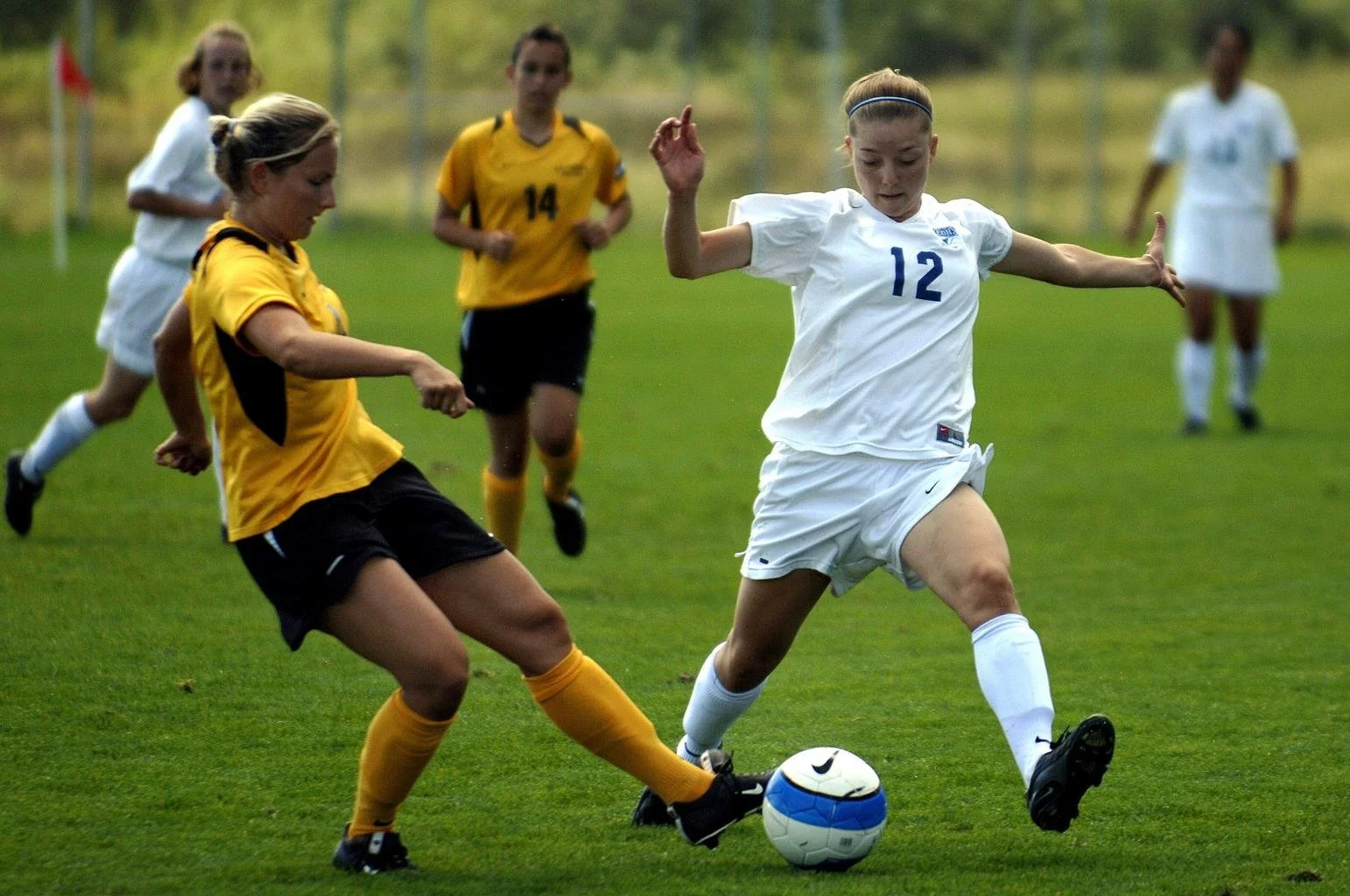
The newer story is about women. In a 2018 study in Radiology, researchers scanned 49 men and 49 women who played amateur soccer and headed the ball a similar number of times, roughly 470 to 490 headers a year. Women showed white-matter changes in eight brain regions versus three in men, covering about five times as much brain tissue.
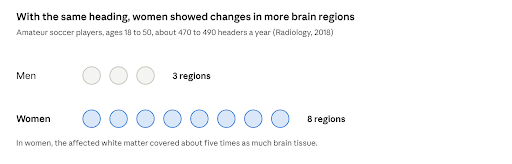
Each circle is one brain region where more heading was linked to white-matter changes.
Why would women be more vulnerable? Smaller neck muscles and head size likely play a role, but hormones may too. Women tend to report more symptoms after concussion and recover more slowly. A 2025 scoping review concluded that the menstrual cycle phase affects both post-concussion symptoms and baseline testing. An older study found that women injured in the luteal phase, when progesterone is high, had worse outcomes a month later. One theory is that the sudden drop in progesterone after injury removes some of its protective effect.
This spring, a small study of five elite female players tracked 256 headers across the menstrual cycle. The force of the headers didn't change with cycle phase, but changes in cognitive performance were linked to both heading and cycle phase. With only five players, it's a first look rather than an answer. Still, it raises a striking possibility: the same header may land differently depending on where a woman is in her cycle.
For children, US Soccer has banned heading for players 10 and under since 2015, and limits it for ages 11 to 13.
When the Injury Is Invisible
The brain doesn't need a blow to the head to be hurt. Overwhelming experience leaves its own marks: combat, assault, a car crash, a childhood lived in fear. In my years as a psychiatrist, I saw how trauma could reshape a person as surely as any physical injury.
Chronic stress and trauma change the brain's structure. Prolonged high cortisol can shrink the hippocampus, our memory center, and weaken the prefrontal cortex, which helps us calm down and think clearly. Meanwhile the amygdala, the brain's alarm system, grows more reactive. The result is a brain tuned for danger: hypervigilant, quick to fear, and slow to settle.
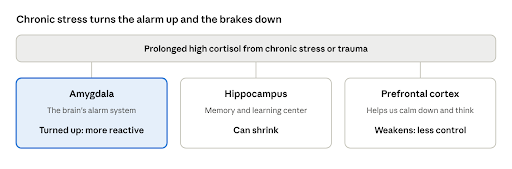
The alarm gets louder while the parts that remember and regulate grow weaker.
Physical and psychological trauma often travel together. The same car accident that jolts the brain can also leave PTSD behind. In veterans exposed to blasts, TBI and PTSD overlap so often that their symptoms can be hard to tell apart: poor concentration, irritability, sleep problems, depression. This is why good care is concerned with both the injury and the experience around it.
Why Two People Heal So Differently
Two people can take the same hit, or live through the same disaster, and walk away with very different outcomes. Genes are part of the reason.
APOE4, the best-known genetic risk factor for Alzheimer's disease, also appears to matter after brain injury. Several studies have linked it to slower recovery and poorer outcomes after TBI, though results are mixed. The likely reason is that APOE helps the brain clear debris and repair damaged neurons, and the E4 version does that job less well.
On the psychological side, a gene called FKBP5 helps regulate the body's stress hormone system. In 2008, researchers found that adults with certain FKBP5 variants who had been abused as children were far more likely to develop PTSD symptoms. Later work showed why: childhood trauma can chemically change the gene, which leaves the stress response turned up for years.
It's a powerful reminder that genes are not destiny. They load the dice, but experience rolls them, and that is where the hopeful part of this story begins.
Neuroplasticity: The Superpower That Works Both Ways
Neuroplasticity is the brain's ability to rewire itself: to strengthen connections we use, prune those we don't, and build new pathways around damage. It is the superpower behind every recovery after injury. But like any superpower, it has no sense of right or wrong. It simply strengthens whatever we practice.
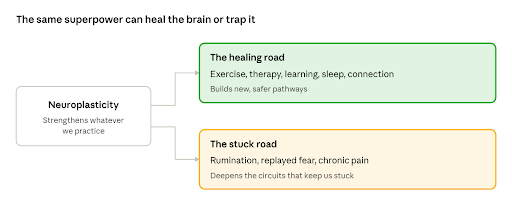
The brain doesn't choose the road; what we repeat does.
The positive side. After a brain injury, rehabilitation works because the brain can reroute function to healthy tissue. Exercise boosts BDNF, a protein that acts like fertilizer for neurons. In one well-known 2011 trial, a year of brisk walking enlarged the hippocampus in older adults by about 2 percent, roughly reversing one to two years of age-related shrinkage. Learning, novelty, social connection, and sleep all feed the same growth.
The negative side. The same machinery can dig trenches we don't want. Neurons that fire together wire together, and that includes fear. Each time a traumatic memory is replayed, each hour of rumination, each flare of chronic pain can strengthen the very circuits that keep us stuck. PTSD, depression, and chronic pain are in part examples of plasticity working against us.
The hopeful turn. Here is the good news hidden in the bad: if the brain learned it, the brain can relearn it. Trauma-focused therapies such as prolonged exposure, Eye Movement Desensitization and Reprocessing (EMDR), and somatic therapy work by building new, safer associations that compete with the old fear circuits. Exercise, mindfulness, and medication can help open the door. The same superpower that entrenches trauma is the one we use to heal it.
Protecting and Rewiring Your Brain
Prevent the hit. Wear a helmet for biking, skiing, and horseback riding. Fall-proof your home with good lighting, grab bars, and no loose rugs. Buckle up every time.
Take concussions seriously. Any blow followed by headache, confusion, dizziness, or mood change deserves medical attention. Rest the brain, then return to activity gradually.
Ask about heading. If you have a child or grandchild who plays soccer, ask how often their team practices headers and whether coaches follow US Soccer guidelines.
Treat the invisible injury too. Trauma-focused therapy is effective, and it's never too late to seek it.
Feed positive plasticity. Move your body, lift something heavy, learn something new, sleep well, and stay connected to people you love.
If you or someone you love is struggling with thoughts of suicide, call or text 988, the Suicide & Crisis Lifeline, available 24 hours a day in the US.
Attention: Brain Body Health is now on Substack. You can download it on your mobile device or computer.
Creating each newsletter takes dedication and passion. Supporting this work ensures it can continue to inspire and educate.
Venmo: @bettyglacy
PayPal: @BettyLacy932
To optimal health and peace for all!

Subscribe to the email list for news and updates on Body-Brain Health
bettylacymd@gmail.com
Brainbodyhealth.org
For more information on Coaching sessions: Contact Dr. Betty @ bettylacymd@gmail.com for an appointment.
Brain & Body Health Newsletter | All content is for educational purposes. Please consult your physician for personal medical advice.
“If you want to go FAST, go alone. If you want to go FAR, go together."
- African proverb
To our optimized health!