My mission is to be the first woman in 4 generations to not develop Alzheimer’s Disease (AD). On my journey of discovering ways to mitigate my risk, I pass this information on to you in this Brain-Body-Health (BBH) Newsletter.
Bonjour, Brain Body Health Citizen Scientists
What Will You Do With Your One Precious Brain?
We are in Paris, my husband and I. Our son Ross arrives today.
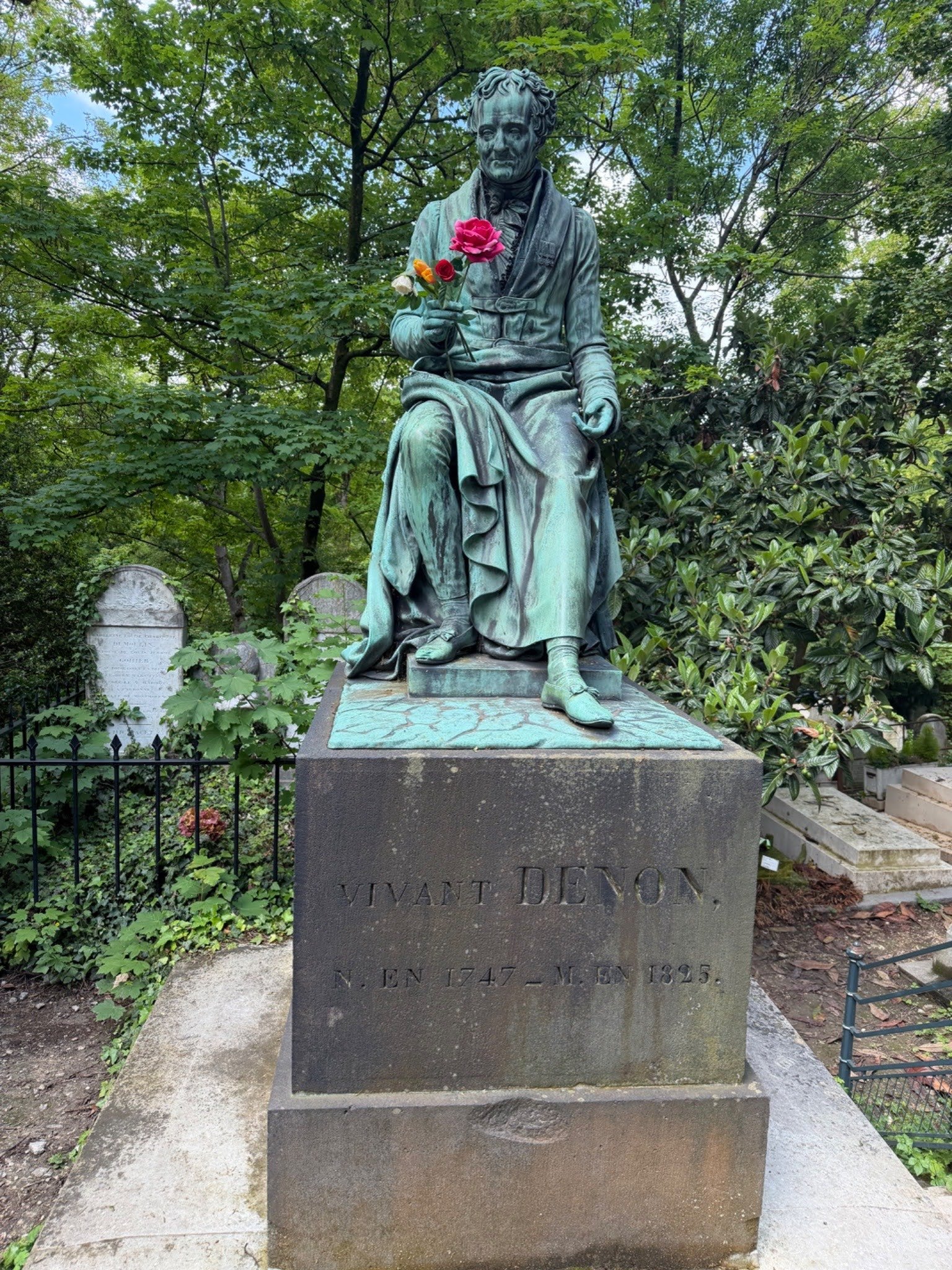
We are staying in the 20th arrondissement known for its lack of tourists, diversity of vibrant cultures and delicious foods. Nearby is the vast, extraordinary cemetery, Père Lachaise, where art seems to follow you even among the dead. The narrow passageways wind between monuments and mausoleums draped in ivy. Resting here are luminaries whose work still echoes through our interconnected world: Édith Piaf, Oscar Wilde, Chopin, Jim Morrison. Walking the paths between crypts, I found myself thinking of the poet Mary Oliver.
"Tell me, what is it you plan to do with your one wild and precious life?"
It is the closing line of her poem "The Summer Day" — one of the most quietly important questions in American poetry. I have carried it with me for years. But walking through Père Lachaise, surrounded by the memory of those who burned so brilliantly and are now still, I felt a different version of the question rise up in me, the one I always come back to, because it is the lens through which I see everything:
What will you do with your one precious brain?
In case you missed it:
This newsletter is part of a series we have been doing on real-life superpowers.
February: Superpower of Genetics
March: Superpower of Play
April: Superpower of the Vagus Nerve
Because here is the truth — I spend my professional life sitting with: the brain that let Édith Piaf feel everything deeply enough to sing it, the brain that gave Oscar Wilde language sharp enough to cut glass, the brain that let Chopin hear music no one else could hear — those brains were not inevitable. They were the product of biology, yes, but also of lived experience, of stimulation, of health, of chance. And they are vulnerable. All of them. All of ours.
Alzheimer's disease and related dementias (ADRD) are coming for a staggering number of us, or for people we love. Sadly, more members of my own family have recently begun showing symptoms of cognitive impairment, and it is that closeness to the disease that keeps me wanting to spread the word about prevention and what we can do now. The science tells us, with more clarity than ever before, that nearly half of those cases are preventable.
That is what today's newsletter is about. I want to take you with me from those Parisian passageways back into the data — because the story the research tells is one of both grave urgency and genuine, evidence-based hope.
The Statistics And Hope
56.9 million people are living with Alzheimer's disease and related dementias right now
Nearly 10 million new cases are diagnosed every year — one every 3.2 seconds
By 2050, the world is projected to be home to 139 million people living with dementia
And yet: the 2024 Lancet Commission has confirmed that nearly half of all cases are potentially preventable by addressing 14 modifiable risk factors
Not a cure. Prevention. The kind of medicine that happens in your daily choices, your doctor's office, your kitchen, and your community.
From A World Health Perspective
Walking through Père Lachaise cemetery, I was already thinking about brain health from a world health perspective. Where is dementia most prevalent and where is it the least?
Europe shows the greatest inequality in dementia burden between its nations. The difference between Scandinavia, with its long investments in education, cardiovascular care, and smoking reduction, and parts of Eastern and Southern Europe — where older generations had less access to all of those things — is measurable in brain cells. People born in more recent decades here have significantly lower age-specific dementia rates than their parents and grandparents — a testament to post-war investments in public health and education — yet total case numbers keep climbing as the population ages.
Asia is the current epicenter of growth. East Asia — led by China — now reports the highest age-standardized incidence rate in the world: 149.6 new cases per 100,000 people per year. The forces converging here are powerful: a massive aging population (partly the legacy of the one-child policy), rapid urbanization, some of the world's most severe air pollution, rising rates of diabetes and obesity as diets westernize, and a tradition of family caregiving that is straining as families grow smaller.
The United States presents its own paradox. Younger American-born cohorts are also seeing declining age-specific rates. But dementia cases in the U.S. are projected to double by 2060 as the boomer generation ages into peak risk. The economic cost is already staggering: dementia-related costs in the U.S. alone are projected to exceed $781 billion in 2025 — most of it not medical bills, but unpaid family labor, lost income, and the invisible toll on caregivers.
The 14 risk factors — and what makes this a life-course disease
This is the heart of what I want to share with you today, because it reframes everything.
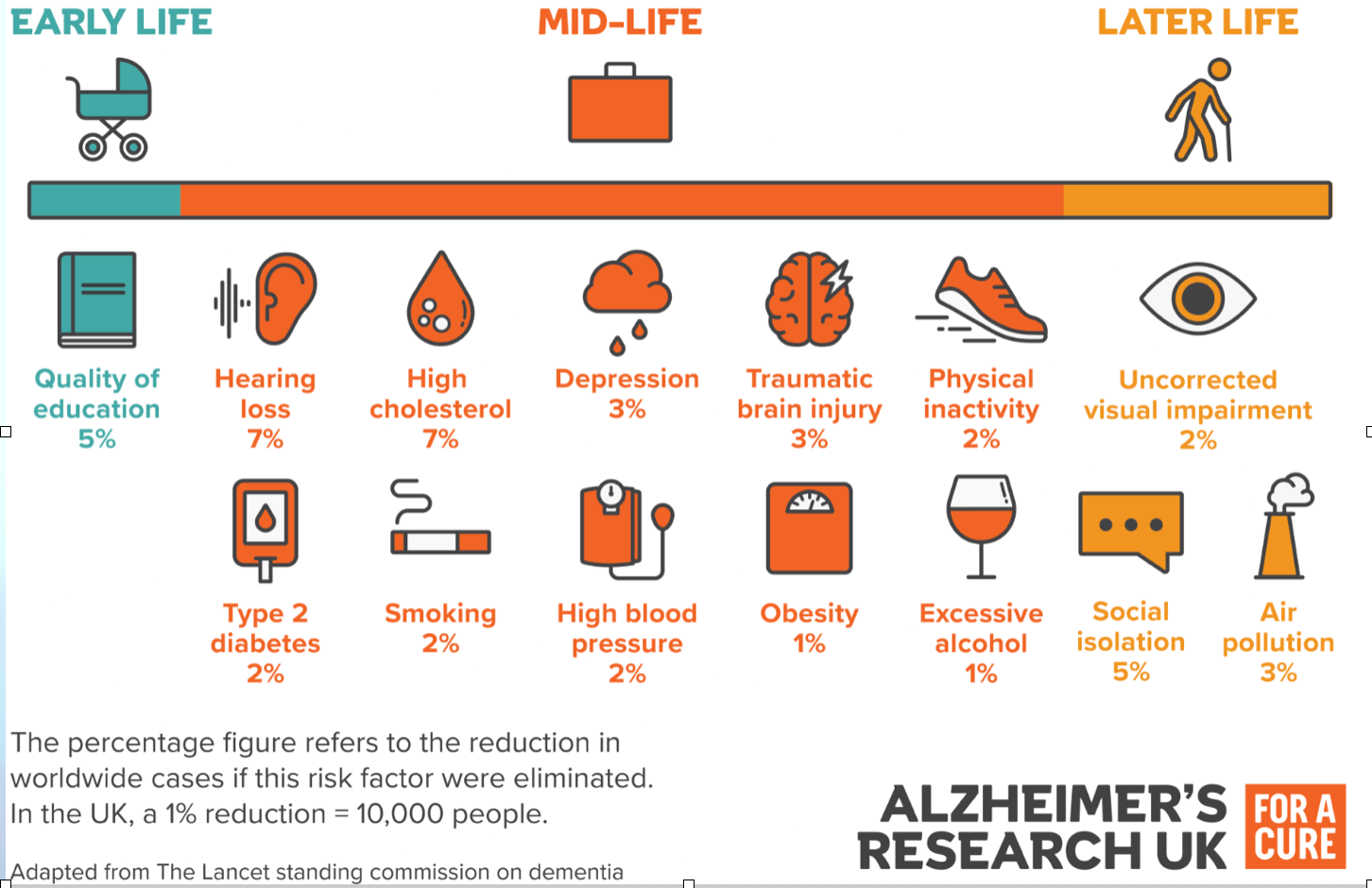
Dementia does not begin when someone forgets where they put their keys at 75. It begins — silently, slowly — in childhood, in midlife, in the decades before any symptom appears. That means the window for prevention is not narrow. It spans your entire life. And the 2024 Lancet Commission has now mapped that window with remarkable precision. (This is what I spend the most time on in my BBH Talks.)
The Lancet Commission Map:
Early life: the foundation
Low education accounts for 7% of global dementia cases. Education builds cognitive reserve — neural capacity that buffers the brain against later damage. This is why the historical denial of education to girls shows up decades later as elevated dementia risk in those same women. Injustice in childhood becomes biology in old age.
Midlife: the window of greatest leverage
Twelve of the fourteen risk factors cluster here — roughly ages 40 to 65 — making this the most critical window for prevention.
Hearing loss (7% of cases): reduced auditory input forces the brain to divert cognitive resources to "hearing," depleting reserves and driving social withdrawal. Hearing aids help — most people simply wait too long.
Hypertension, diabetes, and obesity form the vascular triad. Each alone roughly doubles dementia risk; together they compound through damaged blood vessels, toxic blood glucose levels, and chronic neuroinflammation.
Air pollution — PM2.5 particulate matter — crosses from the lungs into the bloodstream and triggers neuroinflammation directly. It ranks alongside blood sugar and BMI as a top predictor of Alzheimer's biomarkers. A brain health emergency hiding in plain sight.
Social isolation accounts for 5% of cases — the same as smoking. Loneliness chronically elevates cortisol, damages hippocampal tissue, and starves the brain of stimulation. We should treat it with the same seriousness.
Smoking, depression, physical inactivity, excessive alcohol, and traumatic brain injury round out the midlife list — each with clear biological pathways and real opportunities for intervention.
Later life: two additions from 2024
Untreated vision loss (2% of cases): mirrors the hearing loss pathway — reduced sensory input, withdrawal, cognitive understimulation. Cataracts are the most common cause and are surgically correctable. A pair of glasses may genuinely reduce dementia risk.
High LDL cholesterol (7% of cases): promotes amyloid plaque formation and cerebrovascular disease. Women's LDL rises sharply after menopause — a previously overlooked risk window. Your cholesterol panel is a brain health document.
The gender gap: why women face an unequal burden — and why this is personal to me
I want to pause the data for a moment, because this section is not abstract for me. It never has been.
It is the early 1980s. I am a young woman who wants to go to medical school. I apply. I am not admitted — like many women of my generation, the doors of American medical education were not fully open to us yet. The numbers were not in our favor, the culture was not in our favor, and the unstated message was clear enough: this is not really for you.
So I looked elsewhere. I found a French medical program. There was one problem — actually, two. I did not speak French. And I had an 18-month-old son.
Could I go to medical school and be a mother?
There were not many of us asking that question inside those lecture halls. Only one parent existed in our entire French program. What was necessary: improvisation, determination, and the particular exhaustion that comes from never quite fitting the mold the institution was designed for. Those were hard years. Beautiful in their way, as hard years often are in retrospect. But nevertheless, hard.
I am thinking about those years now, standing on the other side of a career I built anyway, in the country of France that first opened a door for me — because the research on women and dementia maps onto the landscape of how we live today.
Women living with dementia outnumber men by nearly two to one: 31.7 million women compared to 17.2 million men worldwide. Longevity accounts for part of this, women live longer but it does not account for all of it.
The biology is real: the APOE4 gene, the strongest genetic risk factor for Alzheimer's — hits women harder than men who carry the same variant, possibly due to interactions with estrogen. Post-menopausal drops in estrogen may withdraw a form of neuroprotection that was quietly operating for decades. Women who undergo early menopause appear to carry elevated risk.
But the social architecture is just as real and it maps directly onto the lives of women like me, like many of you.
Depression affects women at nearly twice the rate of men globally, and it is both a risk factor for dementia and a potential early symptom — a feedback loop that is painfully difficult to untangle. The chronic low-grade stress of being the only one, or one of very few, in rooms not designed for you — that is not just emotional. It is cortisol. It is neuroinflammation. It is biology.
The caregiving burden is perhaps the most painful irony in all of dementia research. Women provide 70% of all care hours for people living with dementia, averaging five hours of care and supervision per day. Chronic caregiving stress elevates cortisol, disrupts sleep, drives social isolation and physical inactivity. Women are giving care, the most generous act, in ways that measurably put their own brains at greater risk. Yes, caregiving can be dangerous to your health!
And the early life piece cuts deepest of all. The historical denial of education to girls, still living in the memory of older women across Southern Europe, South Asia, and much of Africa — shows up decades later as elevated dementia risk. Injustice in girlhood becomes neurology in old age.
Here is the finding that stopped me cold when I first read it: despite dementia primarily affecting women, 57% of the 14 modifiable risk factors are more prevalent in men. The entire framework of prevention may be miscalibrated to women's actual lived experience. Researchers are now calling explicitly for sex-specific prevention strategies, an acknowledgment, long overdue, that the medicine of the brain is not gender-neutral.
I think about the woman I was in those French lecture halls, exhausted, underprepared in the language, nursing ambition and a toddler simultaneously, and I think about what it cost neurologically, and what it also built. Cognitive reserve is not just classrooms. It is meeting challenge. It is learning something hard. It is navigating a world that wasn't designed for you and finding your way through it anyway.
We built something, those of us who pushed through those years. I hope we are protecting it.
Back to Paris — and what we do now
Ross arrives today. We are waiting for him, and I find myself sitting with that anticipation the way you do when someone you love is almost here — thinking about how France is where his story and mine intersected, all those decades ago. He was 18 months old and I was a medical student who didn't yet speak the language. This country was the beginning of something. Now we are back, the three of us, to begin another chapter.
There is something about returning to a place that held a difficult, formative season of your life. You see it differently. You see yourself differently in it.
I keep coming back to Mary Oliver: What will you do with your one precious brain?
I think about Édith Piaf, who sang about no regrets. I think about what that could mean for brain health — not no regrets about what has already passed, but no regrets about what we could still do, starting now.
The fourteen risk factors are not abstractions. They are your hearing appointment you've been putting off. Your blood pressure cuff gathering dust. Your cholesterol panel from three years ago. Your vision prescription from 2019. The friend you've been meaning to call. The walk you didn't take this morning. The first or second glass of wine you pour automatically.
None of us can address all fourteen. But every one we act on compounds quietly, over years — into a brain more resilient, more reserve-rich, more capable of continuing to experience this wild and extraordinary world.
France opened a door for me once. Science is opening a door for all of us now. The door is prevention. It has been there all along, and it is not too late to walk through it.
Take care of your brain. It is the only one you have, and it is the instrument through which you experience every single thing that makes your life yours.
Action checklist: your brain this week
☐ - Schedule a hearing evaluation if you haven't had one recently.
☐ - Check when you last had your cholesterol and blood pressure measured.
☐ - Get your vision prescription updated.
☐ - Make one social plan — call someone you've been meaning to reach.
☐ - Walk for 30 minutes outside today.
☐ - Look at your sleep — 7–8 hours is not optional for the brain.
Resources:
Global Burden of Disease Study 2021
2024 Lancet Commission on Dementia Prevention, Intervention, and Care
World Health Organization
USC Schaeffer Center for Health Policy & Economics
PLOS ONE, December 2025
Attention: Brain Body Health is now on Substack. You can download it on your mobile device or computer.
Creating each newsletter takes dedication and passion. Supporting this work ensures it can continue to inspire and educate.
Venmo: @bettyglacy
PayPal: @BettyLacy932
To optimal health and peace for all!
À la prochaine fois!

Subscribe to the email list for news and updates on Body-Brain Health
bettylacymd@gmail.com
Brainbodyhealth.org
For more information on Coaching sessions: Contact Dr. Betty @ bettylacymd@gmail.com for an appointment.
Brain & Body Health Newsletter | All content is for educational purposes. Please consult your physician for personal medical advice.
“If you want to go FAST, go alone. If you want to go FAR, go together."
- African proverb
To our optimized health!